Mont-Saint-Michel & Saint-Malo: 2 full days
Mont-Saint-Michel • Bretagne· 2 full days
from €400 / person
Destinations — Le Mont-Saint-Michel
Mont-Saint-Michel is one of the most singular places on earth — and one of the easiest to experience badly if the right details aren't sorted before you arrive.
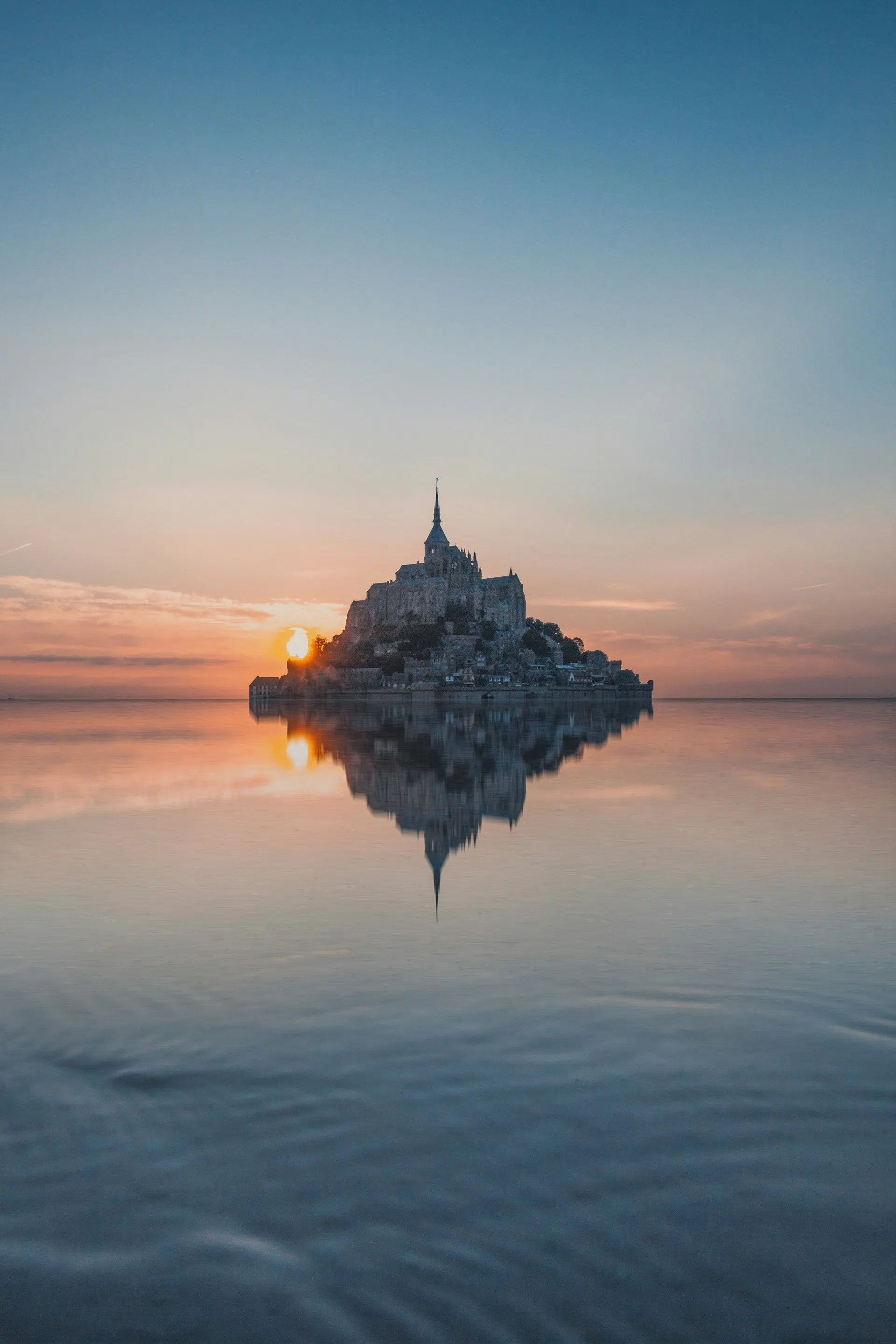
The bay, depending on the tide, can be submerged or stretch out to the horizon. The light shifts fast. The Abbey watches over everything. It can be truly breathtaking. But getting there at the wrong time, losing time in the parking system, climbing when crowds are at their peak, or visiting the Abbey when everyone is already exhausted — these are the details that can turn a dream destination into a draining experience.
We know the Mont and the bay in depth. We plan your arrival around tides, light, and visitor flow. We choose the simplest access for you. We build a day without pointless detours — the right time slots, the right breaks, the Abbey when you still have energy for it.
All bookings are handled by us: Abbey, accommodation if needed, local transport. You arrive with a clear programme. While you're there, we stay reachable.
Want to see a concrete example? Look at our Mont-Saint-Michel and Saint-Malo trip, then let's talk about your project.
We start from your dates, budget, and pace, then take care of the rest: neighborhoods, visits, and the bookings that need to be made — all handled for you. The goal is for everything to flow naturally—and for you to understand why each choice makes sense.
About ItineraryFrance →Why Le Mont-Saint-Michel is worth it
Get inspired by this example, then let's talk about your trip.
Mont-Saint-Michel • Bretagne· 2 full days
from €400 / person
Practical pointers to build a realistic—and above all enjoyable—plan.
At Mont-Saint-Michel, order is everything. If you climb at random, you'll quickly end up doing pointless back-and-forth. And trust us: repeating those ups and downs in the Mount's lanes can start to feel like a workout.
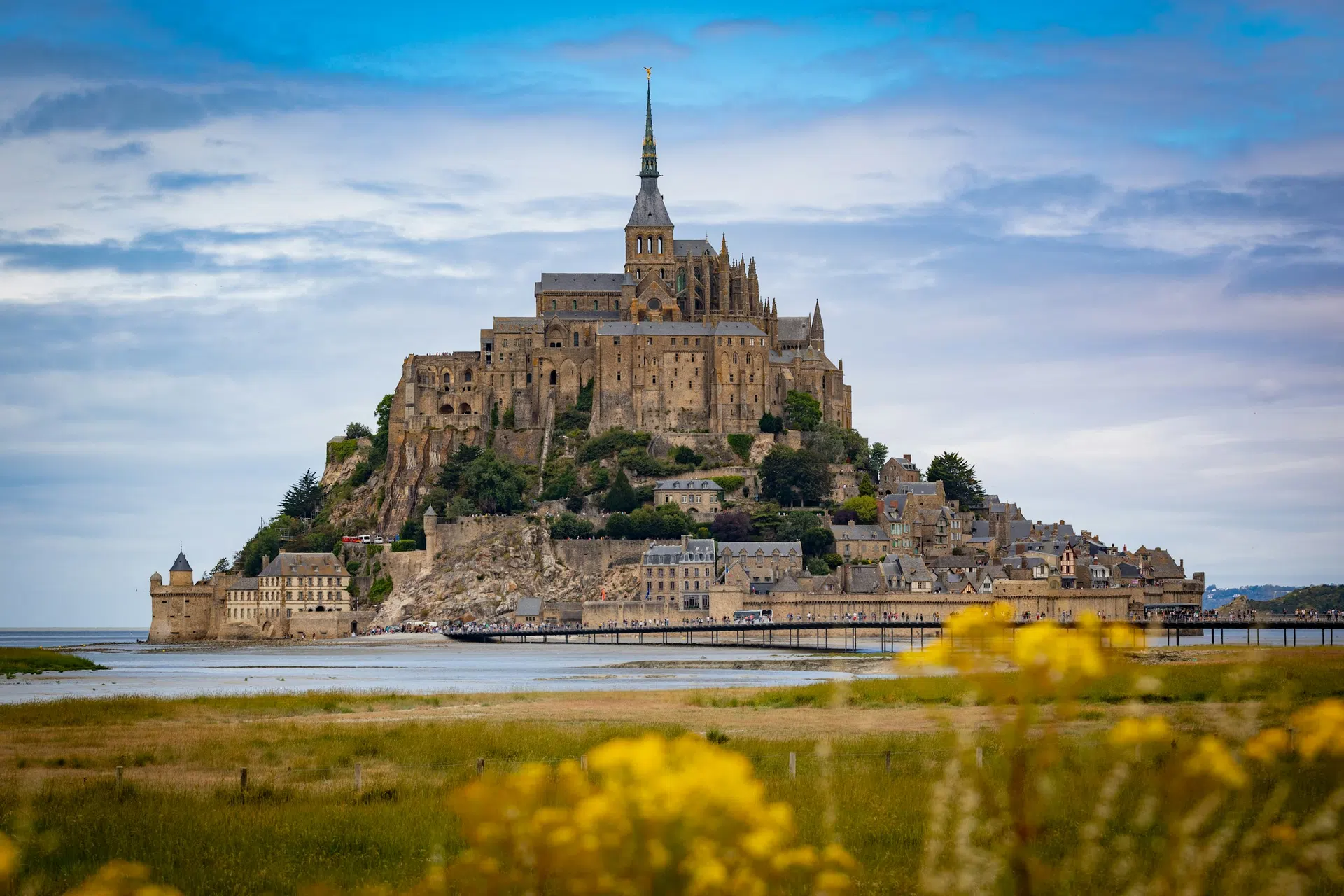
A simple flow that works almost every time: arrival + shuttles → walk in via the footbridge (start with the bay) → a relaxed climb through the village → ramparts and viewpoints → break → Abbey at a chosen time slot → wind down.
In a bespoke trip, we keep that logic, then adjust it to your dates, the tides, and your pace. The goal: a clear, enjoyable day—no rushing, no detours.
What makes the Mount unforgettable isn't just the place. It's when you experience it. The tide changes the set. The light can transform everything. And depending on the hour, the village streets can feel easy… or packed.
Of course, you can't control all of it. That's exactly why we try to maximize what's possible. The most useful move: choose your priority. Want the Abbey in good conditions? We place it while you still have energy, and at a quieter time. Want to see the Mount at high tide? We schedule your visit around it.
That's exactly what we do: keep you from choosing "at random", and give you a simple logic that matches your dates and what you're after.
You don't park "next to" the Mount—and that's the point. It's what helps protect this beautiful site. There's a sequence to know: parking, (optional) shuttles, then the walk. Keep the whole chain in mind when you plan your timing.
If you're coming by car: the idea is to arrive with a clear access plan (where to go, what to follow), so you don't start the day by circling and losing time.
If you're coming by train or bus: it works very well too, as long as you double-check timetables and keep a bit of buffer, so your day doesn't become stressful. In a bespoke trip, we guide you on the access options and spell out the timings to hit.
Sleeping on the Mount means experiencing it when it empties out: quieter, more intimate, almost unreal. Waking up in the middle of the night at full tide and walking the ramparts can be one of those moments you never forget. The trade-off: it takes planning, especially if comfort matters to you (and even more so your budget).
Sleeping nearby (La Caserne, Beauvoir, Pontorson, Avranches) is often more flexible: more options, easier logistics, and practical if you're continuing on to Saint-Malo, Cancale, or Rennes.
Our advice: pick what matters most to you (atmosphere or simplicity), and build the rest around it to avoid backtracking.
If you book just one thing, it's usually the Abbey. The right time slot makes the visit smoother and avoids nasty surprises. And yes, in summer the Abbey can sell out days in advance for certain slots.
The rest can stay flexible: breaks, ramparts, viewpoints, part of the village wander. That's what keeps the day alive and leaves room for the unexpected.
And if your slot is sold out? No need to panic. Adjust the order, keep the day's logic, and don't "replace" it with an option that wastes your time.
You don't always realize it until you're there: between the footbridge, the climb, uneven cobbles, and stairs, the Mount makes you earn it. And if you stack everything without breaks, you often end up "doing" the village without really experiencing it.
What helps, truly: comfortable shoes (game changer), a slow-and-steady climb, and a well-built route. For example: keep the Abbey for a moment when you still have energy, and weave in a rampart loop or a viewpoint instead of piling everything into one block.
With kids—or if you want a gentler pace—keep it simple: fewer viewpoints, longer breaks, and avoid the most stressful time slots. The goal is straightforward: keep enough energy to the end so the day stays enjoyable.
At Mont-Saint-Michel, wind can pick up suddenly, a shower can pass fast, and some hours can feel far busier than others. It happens. And it doesn't mean the day is "ruined".
If it rains: stick to a comfortable, simple logic. Focus on the village and the Abbey, then head back to the ramparts as soon as it eases. In Normandy and Brittany, it's common: one shower, sometimes a second one, and then—out of nowhere—the sun returns within minutes.
The Mount is often paired with Saint-Malo, Cancale, Rennes, or part of the Normandy coast. If the plan is off, you end up spending your time on the road.
The idea is to keep it simple: choose nights that shorten drives, avoid back-and-forth, and leave some margin for weather and fatigue.
That's exactly what we design: a realistic day-by-day plan, coherent travel times, useful recommendations, and a ballpark budget.
Share your dates, travel style, budget, and pace—we’ll build a clear, cohesive itinerary.
Request a custom itineraryFrequently asked questions to plan Le Mont-Saint-Michel with peace of mind.
In summer, a great reflex is often to aim for late afternoon: the mood is softer, the light is gorgeous, and the climb usually feels less cramped. Morning can work very well too—especially off-season, when the site breathes more.
Simple rule: pick your "main moment" (Abbey or viewpoints), then time your arrival so shuttle + climb stay smooth. The trap to avoid: arriving right in the middle of the flow, then burning most of your energy in queues and stairs.
They change the set—plain and simple. Depending on the tide, the Mount can look surrounded by water… or planted in the middle of a vast bay that stretches to the horizon. And the light feels completely different.
They also affect your plan: some viewpoints are far better at certain moments, and a bay crossing needs real prep (with a guide, and at the right time slot).
The key reflex: check tide times before you lock in your day. Otherwise it's easy to miss the "wow" effect you came for.
Think through the full chain: parking → shuttles → walk → climb through the village → Abbey. When you know where you're going, it's smooth. When you figure it out on the spot, it quickly turns into lost minutes… then irritation.
Simple rule: have a clear arrival plan. Trap to avoid: arriving with no bearings, circling, then trying to "make up time" by rushing.
The best slot is the one that saves you from two things: the crowd on one side, and legs (or a body) that have had enough on the other. The Abbey is earned (stairs, climb), so the sweet spot is when you still have energy.
If you like calm visits, pick a time when the village flows better. If you'd rather keep daylight for the bay and the light, place the Abbey at a moment you know you can climb without stress.
What ruins it: booking the Abbey "at random", then arriving at the worst moment, queuing for minutes (or more), and already feeling exhausted.
If you want to experience the Mount when it empties out (evening and morning), sleeping on site is absolutely worth it: calmer vibe, lanes that feel almost yours. The trade-off: fewer options, and it's often (much) more expensive depending on season.
If you want the simplest setup (more choices, easy logistics, practical if you're linking other stops), sleep around: La Caserne/Beauvoir/Pontorson/Avranches.
Yes, it's doable—but you'll want to lighten the on-site plan and stay pragmatic.
Also keep a buffer: access, walking, and the climb take time, even when everything goes smoothly.
Keep the day simple: an easy climb, long breaks, and a clear order of steps.
Often, a ramparts loop + the village + the Abbey at the right time slot is more than enough for everyone to enjoy it.
One thing worth saying: visiting the Mount in the rain has its perks too. There's often fewer people, the mood feels wilder, and misty landscapes can be stunning. Our advice: keep the same day, just swap the order—village lanes when it's sheltered, Abbey during the least pleasant outdoor moment, then viewpoints as soon as the sky breaks.
The Mount stays beautiful in changing weather, as long as you aim for comfort instead of perfection.
It's a great idea if you enjoy nature walks and conditions are favorable.
A guide is essential: the bay has its own hazards (a tide that returns quickly, quicksand), and proper supervision means doing it at the right time, safely, and with a much better understanding of the place.
Yes — we have a Mont-Saint-Michel and Saint-Malo trip that gives a good sense of what we build together: daily programme, step logic, pace. Browse it for inspiration, then contact us to talk about your specific project.
We design your entire trip: a day-by-day programme, all bookings in France (accommodation, transport, activities, guides), and support throughout your journey. International flights are not included. For the full three-step process and what is covered, see our How it Works page.
To enjoy it without rushing, plan wide: time to arrive, walk in, climb, take a real break, then come back down at an easy pace. It takes several hours, and we recommend at least half a day.
If you're just "passing through", you can do it faster—but you'll experience the Mount on fast-forward. Ideally, you have enough time for the bay + the village, and possibly the Abbey.
The Abbey is a real plus if you love history and impressive places. But no, it's not mandatory to feel the Mount's magic.
You can have a wonderful day with the bay, the lanes, the ramparts, and the viewpoints.
Expect to walk: uneven cobblestones, slopes, and lots of stairs if you go up to the Abbey.
Comfortable shoes make a huge difference. With a stroller, it's not the easiest place: depending on your situation, plan an alternative (baby carrier, gentler pace, longer breaks) and avoid the busiest times.
Yes—and that's often when the Mount feels best. Early or late in the day, it's calmer, the climb is smoother, and the light is often nicer.
It's also the best reflex if you want to avoid the "crowded lanes" feeling.
Share your dates, travel style, budget, and pace—we’ll build a clear, cohesive itinerary.